
A memory of laughter
Another post on the empty space of grief

My late dad had a distinctive laugh: loud, sudden, high-pitched. It could erupt at the oddest moments. He had a goofy sense of humour and a fine sense of the absurd. Moments of surprise could make him erupt. And he often laughed at the meaner absurdities of life, laughed so that he didn’t have to weep.
I am reminded of the sound of my father’s laughter because of a dream I had just a few nights ago. During that dream, Dad walked into a room and, apparently surprised to see me there, burst out into that signature laugh. He then walked over to where I was sitting, rested his head on my shoulder, and wept. This was not at all like him in real life; he was a sensitive man but belonged to the generation of men that bottled their feelings. My dream-self let him weep, gave his shoulder a pat, and dropped a kiss on the top of his head. In this dream it was not explained why dad needed to cry. Maybe it didn’t need explaining; although dad’s physical moment of death was quick and, the nurse who witnessed it assured me, without suffering, the final few months of dad’s life were marked by an awful family melodrama that was centred around his finances and saw my sister - who was dear to him, to all of us - estrange herself from us with a suddenness that felt brutal.
I have been house sitting lately, minding an elderly cat called Monique while her pet-mum is away on holiday. Today, coinciding with dad’s birthday, is the last day and I will be dedicating a large chunk of it to the tedious but necessary chores of packing and housework while the empty space left by a dead person’s birthday quietly lies behind all of this mundane activity. I am feeling that odd feeling - akin to but not quite irritation - that arises when I am in a physical in-between space - that slightly melancholic feeling of that last day of a stay away which is marked by the business of shutting that visit down. And, in encountering the first anniversary of dad’s birth after his death, I also encounter the liminality of grief.
He would have been 95 today. He died last November.
Previously dad’s birthday would have meant a trip to see him in his home town’s aged care facility where, thank God, he enjoyed living during the last few years of his life. It would have meant having a glass of wine with him and listening to the same stories he told about his life and which I heard during every monthly visit. These were repeated not because he was dotty - he was impressively sharp right up until his death - but because, in those last years, he was engaged in making sense of a harsh life.
“All happy families are alike; each unhappy family is unhappy in its own way,” wrote Tolstoy in Anna Karenina. God knows, there was plenty of unhappiness within our family unit but one way in which we were surprisingly functional was in our attitude towards dying and death. Perhaps it was to distract ourselves from how weird or awful we were in other ways, but we always could cheerfully talk about our wishes when it came to the practicalities of dying - To resuscitate or not? To “turn off the beeping machine” or not? To donate organs or not? Accordingly, when it came to our parents entering into palliative care we knew their wishes.
We also talked about funerals, and dad had stated many times over the last decade of his life that he didn’t want one. He somehow distrusted them, suspicious of rituals that he found mawkish. His wish was for a private cremation - “just get rid of me” - and then to gather anyone who remembered him for a few farewell drinks down at the pub. Not exactly a wake, just raising a quiet convivial glass or three. This was just as well because by the time of his death his savings were gone, although I nearly killed myself trying to remedy this for him. We would not have been able to afford a funeral, and it was due to the generosity of dad’s niece and nephew that there were sandwiches and cake and a tab on the bar when a small group of us gathered to see him off at the small country town pub that dad had frequented in his youth.
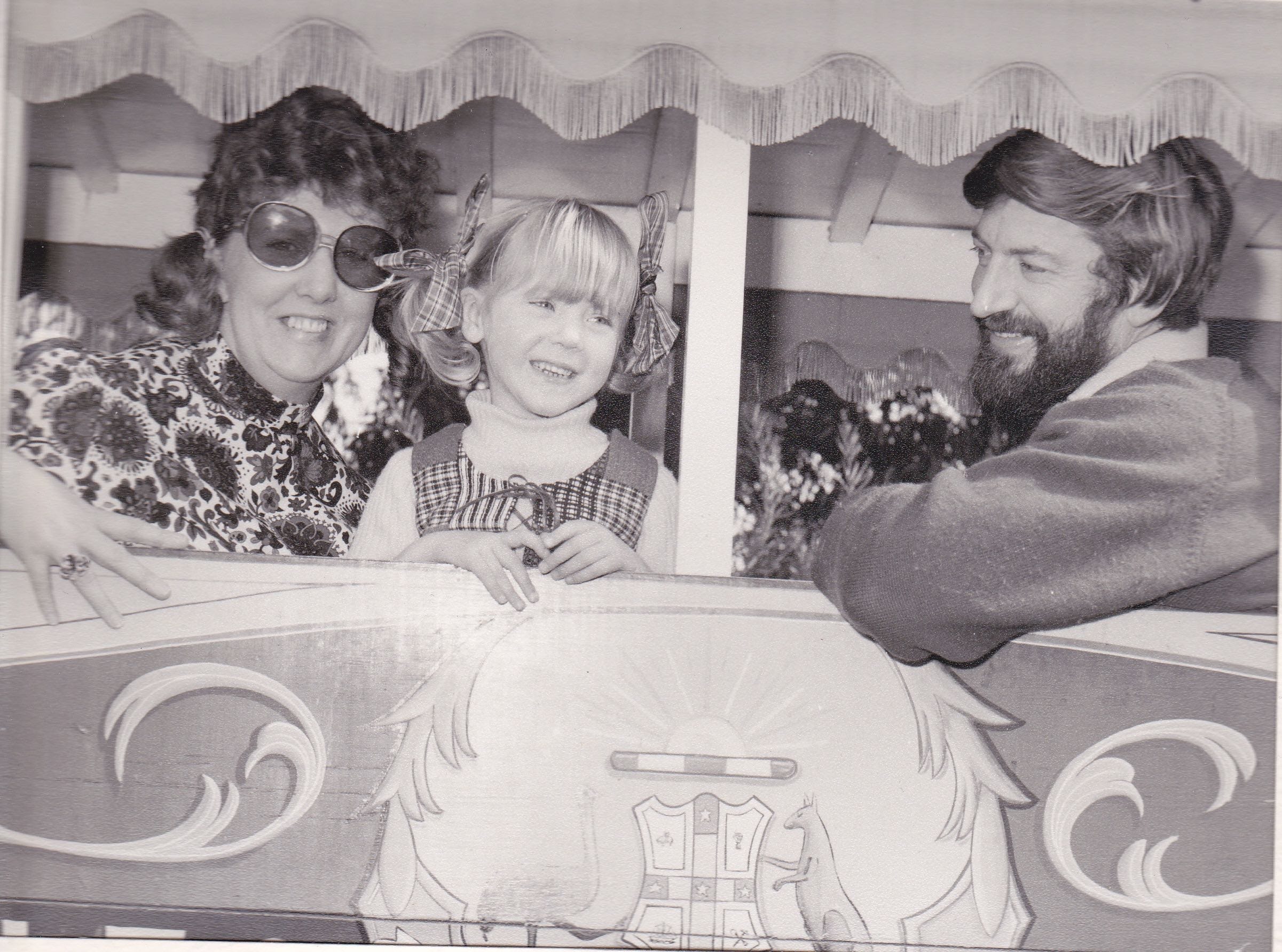
It felt right for me to say a few words about dad, in a non-mawkish way without a hint of ritual. I showed the room a lovely photograph taken of him when he was young that showed a gentle, intelligent, sensitive man who was eager to be happy.
What I said about that eager lad was that:
He grew up to be a kind father and husband.
He had been a clever boy who had had to leave school at 14 but who then grew up to be a journalist, editor, and owner-operator of country town newspapers.
He had been a humble man who was absolutely sure and firm in his opinions and values, who was the still centre of every room he was in, no matter how much noise there was in that room.
He was a quiet person with an outrageous sense of humour. An amiable and friendly introvert. A man of modest tastes who loved good wine, food, words, and company.
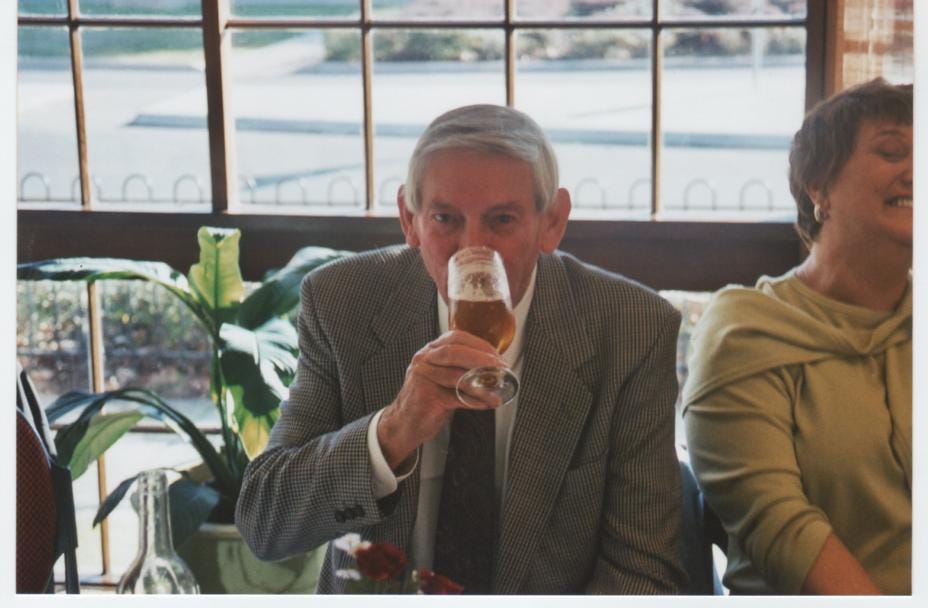
I said that all of these things might seem to be contradictory but dad used his intelligence, his emotional intelligence, and his values to unite them in one purpose: He wanted us to be good to each other, to be kind, and to enjoy life. He didn’t always get his way in this but he showed me how important it was to try.
When I think of my dream-father weeping I’m glad I said those things. I remember dad constantly rehashing those anecdotes during my visits to the aged care home, and how I listened even though we both knew I’d heard them many times, because I could see that with each telling he was holding the story up to the light, turning it this way and that to see where it shone with meaning, and I respected how much he was trying to make sense of a life lived with an abusive father, a volatile wife, and, as the local newspaper editor, often on the receiving end of the nastier style of small town politics. In these retellings he was constantly trying to reconcile fairness - to himself and others - with love, and love with candid reality. Dad really did just want to live a quiet gentle life and somehow this elicited the brutality of too many of the people around him.
The young man in the photograph never had his eagerness for life repaid. And I couldn’t stem the financial damage done to him in the last year of his life. But he is beyond any need for protection now. But he is also beyond the potential for joy, even the small joys afforded to a little old man in a nursing home - a glass of wine, a visit from friends or family, memories of a walk by the river.
He is gone. In the empty space of his birthday I have my dream of him weeping and my memory of his laughter.
Dear reader,
Thank you for reading. I had planned to post something dedicated to the new lunar year of the horse but then I was inspired to write this on my dad’s birthday instead. The horse-themed post will come in a couple of days.
Beautiful.
Thank you for sharing this beautiful eulogy of your father. I think it is rare for a son to know his father so well which is really a tribute to both you and your father. This line really captures it all: 'Dad really did just want to live a quiet gentle life and somehow this elicited the brutality of too many of the people around him.' Thanks again, Irena