
Grief as a complex space
Grief, celebration, and bushfires.

Dear reader,
Just a few days ago I read an article about some volunteer firefighters from a tiny rural village in my home state of Victoria here in Australia. The article detailed their ordeal of fighting recent bushfires; they narrowly escaped death due to their resourcefulness, witnessed the death of animals and birds in the burning bush surrounding them, and lost a home to the fires while trying to save other people’s properties.
“She was captain of her local brigade, in charge of protecting her community, but she had to make the call that her own house could not be saved.” - from As bushfires swept across Victoria, Terip Terip’s volunteer brigade fought to survive by Elise Kinsella, ABC News
This article was compelling but sobering to read. When I read how the brigade captain sacrificed the opportunity to try and save her own home in order to divert resources to homes that stood a better chance of surviving, tears came to my eyes. This was partly due to the cumulative effect of reading and hearing news coverage of these devastating fires. But I was also stirred to read of the narrow escape of these firefighters. And I was incredibly moved by their courage, their selflessness, and their determination to protect their community.
The horrible destruction of bushfires in recent years provides us with much to grieve: the death of people, human and non-human. The annihilation of beautiful bushland. The destruction of homes and businesses. The trauma of the survivors.
Australia has always been a bushfire prone country; some of our native plants have evolved so that they cannot reproduce without fire. But in recent years climate change has caused worse bushfires that burn longer, hotter, and more destructively. Climate change related grief is a growing phenomenon.
But, in this article, alongside the horror was also much to celebrate. The firefighters did escape death. And they, and many other volunteer firefighters across our state, exemplified the best of human nature: courage, selflessness, resourcefulness, and care for each other and their community.
Reading about the death and destruction was awful; reading about the heroism was wonderfully uplifting. After reading this article I realised that it showed an example of how some - not all but some - situations elicit grief alongside feelings of inspiration or uplift. Try to ignore your feelings about one, then you risk avoiding or distorting the other.
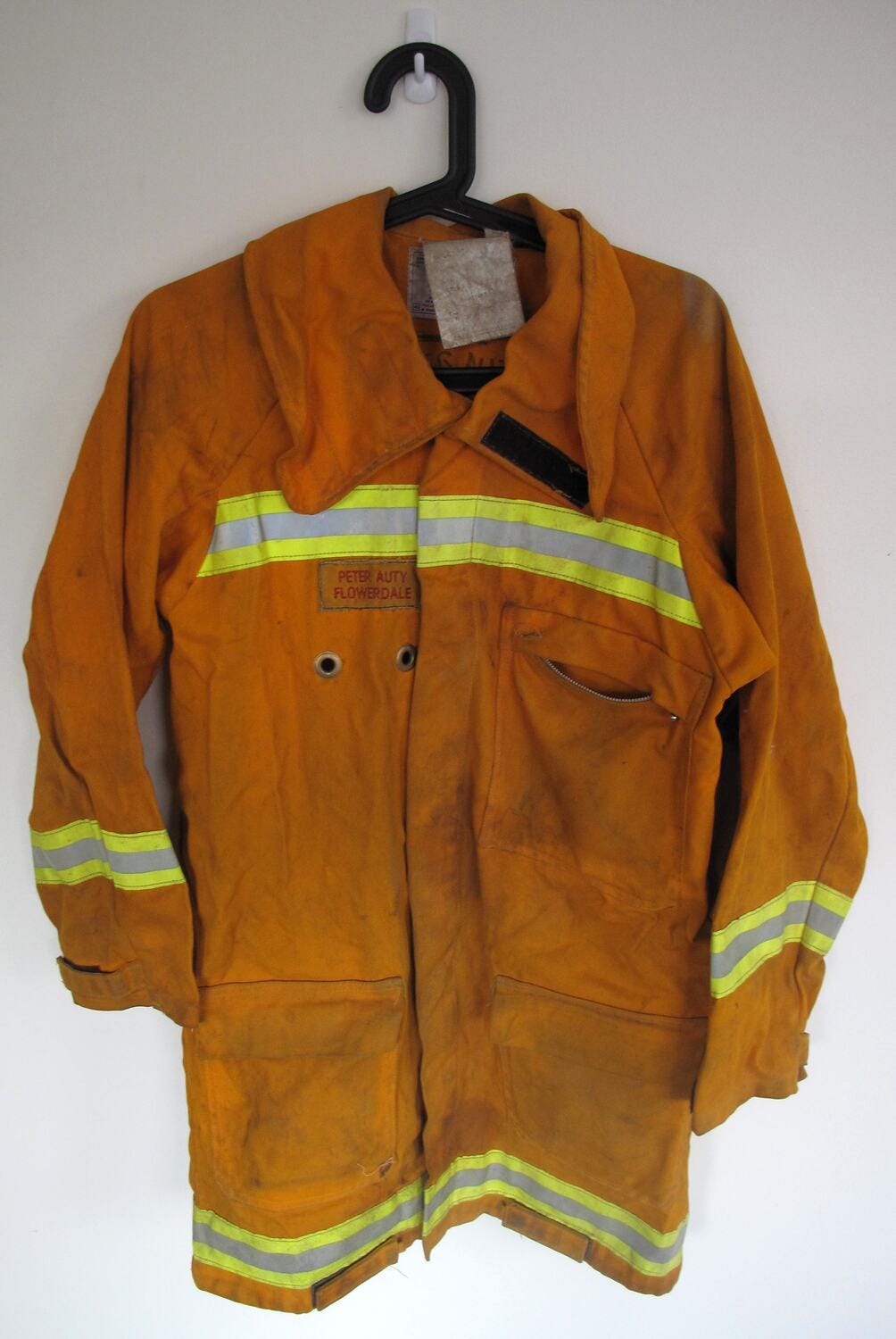
We live in a society that is squeamish about experiencing grief. Too many people see it as something to be overcome or tidied away as soon as possible and rush to shut down the space of grief as soon as it opens up. But they don’t understand that when you do that then you can also potentially lose a space of celebration, or discovery, or wonder. In some situations these things are interwoven into the experience of grief.
If the journalist who wrote this article had brushed over the destructiveness and danger of the fires, then the heroism of the firefighters would not be fully understood but instead sold short. And if the article had instead dwelt only on the destruction and not fully explored the selfless and resourceful acts of the firefighters, then that would have been unfair to both these heroes and the readers of the article. Necessary context for understanding and celebrating the heroic would have been lost if the depictions of loss had been underwritten; necessary context for understanding the depth and meaning of grief arising from this calamity needed the uplifting aspects of this story to stand in contrast to the horror.
To understand what was worth celebrating in this article meant that the reader had to understand what needed to be grieved. Grief can be painful, but it can also create space for the life affirming.
If we let it. Of course, the agency of the grief-stricken has to be respected in regards as to when and how they explore and express their experience of grief. I am still raw and smarting following some losses over the last two years, and still searching for the right way and place to start talking about it. But, as painful as my grief has been, its urgent and honest energies have also plugged me into what’s important for me and the way I want to live. Grief has been a complex space to inhabit, and the complexity of this space - and its capacity to hold both devastation and inspiration - is what has saved me.
If we don’t allow the possibility of this complex space to exist, if we try to weed out the complex relationship between grieving loss and affirming life, then we lose the opportunity to fully experience both of these things.
Thank you for reading.
I am very compelled by the subject of grief and intend to write more about it. But is this Substack the right home for these reflections? Or would you like to see different content? I am currently reviewing the direction of this Substack and want to hear from you: What do you want? What draws you to this Substack?
Keep writing what you’re writing here, Meredith…separating your thoughts on grief and healing from art and creativity is exactly what you shouldn’t do.
Staying true to these complex spaces containing opposing feelings is necessary for living a life that is not flattened into a semblance of being, but is multidimensionally real, with trauma and tragedy, as well as romance and comedy. As Chesterton said, "The glory of God is Man (and Woman) fully alive."