
Flotsam and Jetsam
Etymologies of wrecks and salvage

Dear reader,
This is the latest post in my etymologies of wrecks and salvage mini-series. You can read:
My introductory and explanatory notelet here,
the post on storm and tempest here and
the post on the doldrums here.
I hope you enjoy this latest post.
I presume that most of us know that the phrase ‘flotsam and jetsam’ has connections to the nautical world? I did, although I didn’t know any more than that. But when I started looking into the etymology of these words, I was struck by how specific these terms were.
In modern English, the two words ‘flotsam’ and ‘jetsam’ are always used together to denote throwaway bits and pieces, idiomatically joined at the hip in everyday speech. But there is a key difference between them. (And by the way, according to this Wikipedia article, they retain their original status as legal terms to denote articles of salvage in maritime business even today).
In its note on ‘flotsam’, etymonline.com mentions that this word, entering English in about 1600, was “folk-etymologized in dialect as floatsome”. Which is understandable given that it describes cargo that floats after being lost overboard during a storm or after a shipwreck.
The noun ‘jetsam’ is etymologically related to the verb ‘jettison’; the latter originally meaning the act of deliberately throwing cargo (the jetsam) overboard in order to save a ship by lightening its load. There is a word ‘lagan’ which also describes cargo thrown overboard, but lagan is different to jetsam in that it’s heavier and more likely to sink and is therefore secured to a buoy to mark its location for later salvage efforts.
Torturing the analogy
Imagine being on a ship that is in danger of being torn apart by a violent seastorm. Imagine you have to try to figure out if the ship can ride it out. Or, if a wreck looks to be inevitable, how you mitigate the disaster by saving as many lives and as much cargo as you can.
Imagine the split second decisions that have to be made - what can be tied to a buoy, thrown overboard and reclaimed later as lagan? What will probably float if it was jettisoned and therefore designated as jetsam, sacrificed to lighten the load with the chance that it might be salvageable afterwards? And what of the stuff that gets swept away in the tempest before you get to decide what to do with it? You’ll see this flotsam now out of your reach and control, bobbing away from you on the grey angry waves.
When your life gets sucked into a perfect storm of treacherous conditions, when you are being pounded and pelted by life-elements on all sides, then it becomes impossible to continue on as you have before. Parts of your life get swept away from you before you have a chance to lash them down. Other things you have to jettison because you just don’t have the time, energy, or material resources to carry them or secure them.
What do you have to sell to pay the unexpected bills or to cover a shortfall in income? What friendships founder because you don’t have the time or energy to give to them? What activities do you decide to jettison because they are dragging you down? The question of what can be salvaged later and what will be lost to the storm might not be straightforward; the things that sink and the things that swim may not be what you expect. To have any chance of surviving the disaster might require some desperate decision-making. If you’re lucky. If you’re not then trappings of your life as it was before the storm might be sucked under before you have a chance to decide how to save them.
Thank you for reading!
I hope you are enjoying this mini series. Let me know what it evokes for you:
If you would like to support my writing, you can buy me a coffee here.
And you’d be doing me a great favour if you could share this post:
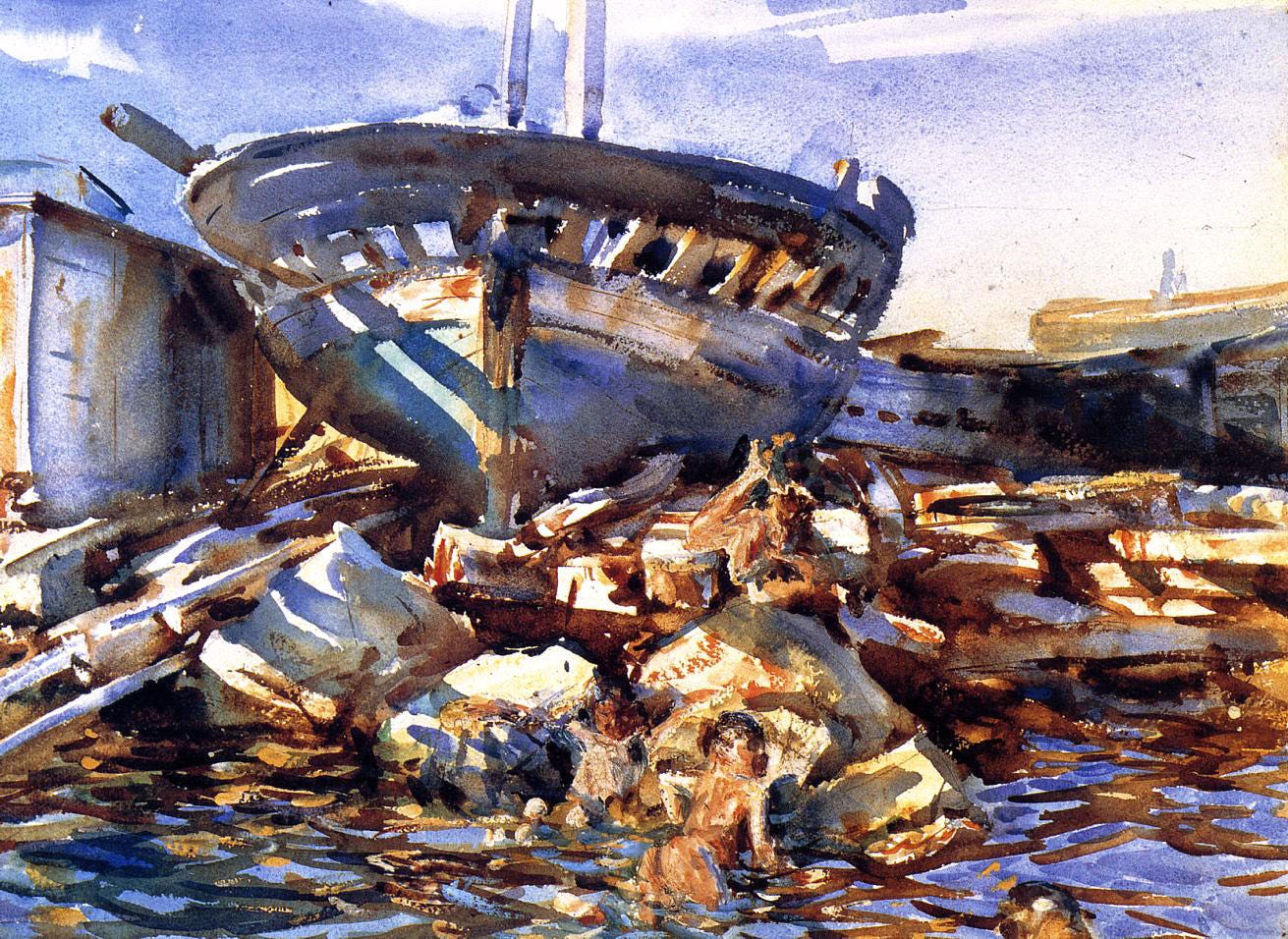
Enjoyed this & the Singer Sargent watercolor.
Just getting caught up on this mini series, after a tempest upended my own life for a while. Everything's okay now, but gee-golly-willikers did your series uncannily align with this reader's life! Thank you.