
Derelict
Etymologies of Wrecks and Salvage

Dear reader,
This is the latest post in my Etymologies of Wrecks and Salvage mini-series. You can read:
My introductory and explanatory notelet here,
the post on storm and tempest here,
the post on the doldrums here, and
The post on flotsam and jetsam here.
I hope you enjoy this latest post.
In the last post I looked at the salvage terms ‘flotsam’, ‘jetsam’, and ‘lagan’. But in my digital browsing into the meanings and etymologies of these terms I found that there was a fourth category of salvage, labelled by a word that surprised me.
We have all heard and used the word ‘derelict’ ad nauseum to mean something abandoned and trashed. But did you know that it started its etymological life in English as a noun denoting abandoned ships or goods from a shipwreck? Etymonline curtly notes:
“Originally especially of vessels abandoned at sea or stranded on shore”
While this Wikipedia article waxes a little more lyrical:
“Derelict can refer to goods that have sunk to the ocean floor, relinquished willingly or forcefully by its owner, and thus abandoned, but which no one has any hope of reclaiming. In terms of maritime law, derelict is considered property abandoned on navigable waters which has no hope of being recovered…”
According to Etymonline, ‘derelict’ has the Latin ancestor ‘dereliquere’ meaning "to abandon, forsake, desert" entirely; this comes from a Proto Indo European root word meaning ‘to leave’. The word ‘relinquish’ is etymologically related.
Torturing the Analogy
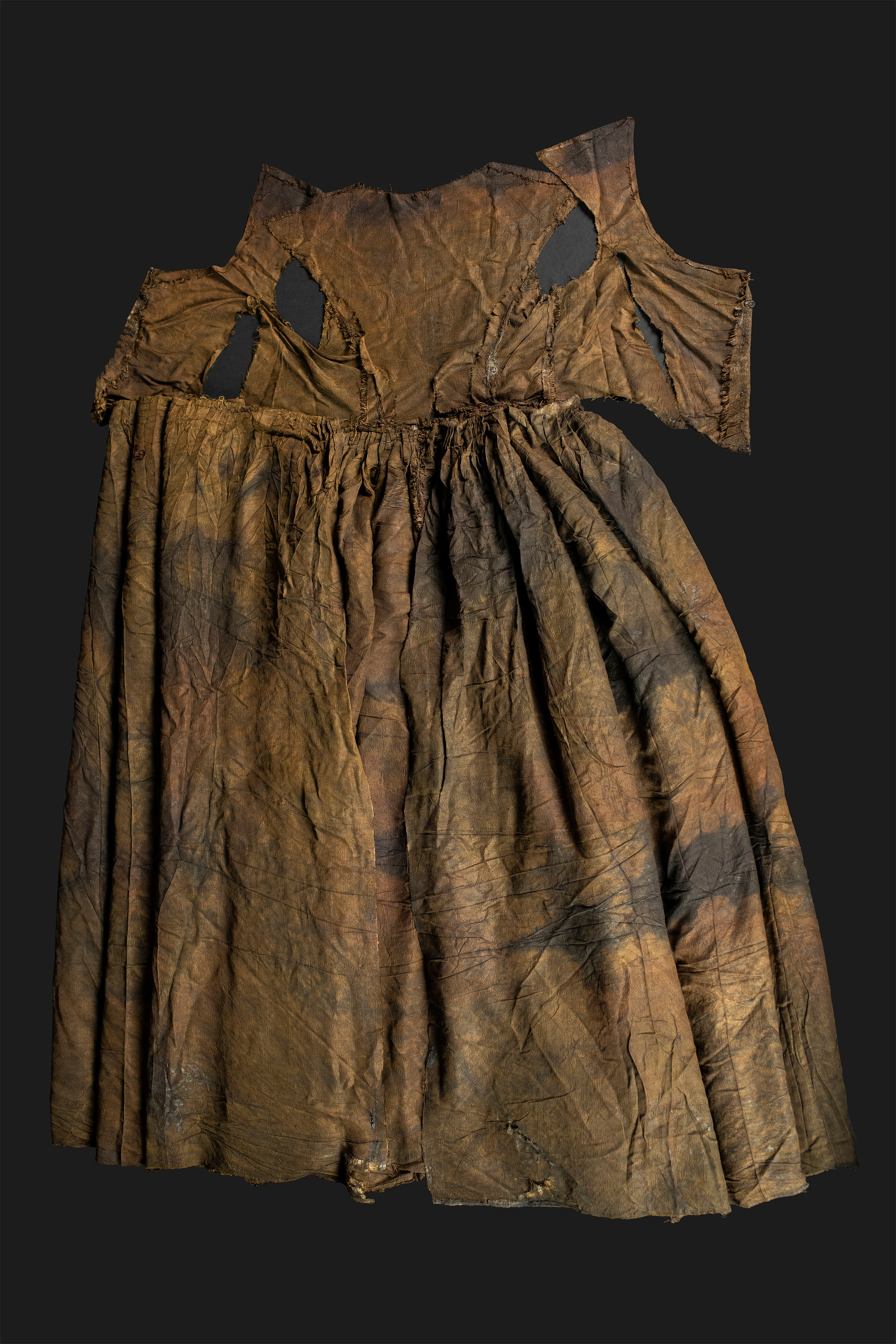
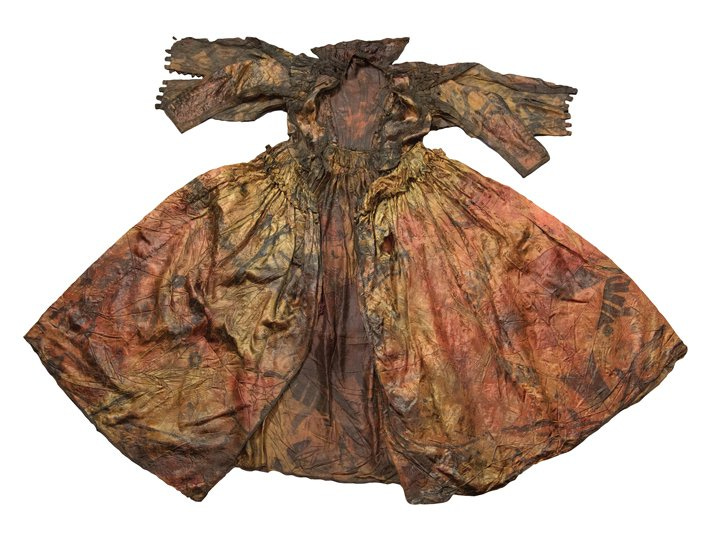
To accompany the text in this article I have two photographs of silk dresses that were discovered by divers at the bottom of the sea as part of the debris of the 17th century Palmwood shipwreck. I find these artifacts to be very poignant. Did the wearer of these dresses make it to safety, I wonder? They must have been beautiful garments once but now, after centuries underwater, they are irretrievably spoiled. They are derelict as unsalvageable cargo, and derelict (according to our modern usage of the word) as trashed items. This is the risk that a wreck presents - it can take something that is originally of value and render it bereft of value.
When considering the aftermath of a major life crisis, the word ‘derelict’ - in its meaning of something abandoned or forsaken - could evoke a couple of things.
Firstly I find myself considering the ways and means in which I feel forsaken. How have I been cast out? By what environmental or systemic conditions or by which people?
Secondly I find myself thinking about being the one who did the forsaking: Who or what did I feel forced to abandon and why? And is any of this salvageable, or is it so ruined or so sunk that it has to be abandoned?
And this is the painful choice we all face when we are foundering in life: What do we try to save, what do we let go of with the assumption that we can salvage it later, and what do we relinquish to the storm? And how do we live with its lack?
Thank you for reading!
I’d love it if you could share this post.
And if you would like to support my writing then you can make a small donation here.
I think too many people feel this way today...derelict.
I love looking into the beginnings of words...they tell stories of the folk back then.